Rendevor's audit process was a black box: audits moved through delegations and sign-offs that nobody in the organization could describe start to finish, across facilities where some staff could use tablets and others were restricted to paper only. I led design and product management on Audit Center, standardizing the process around one workflow that works whether an audit happens on a device, in Excel, or on paper, and closing the loop on paper audits with an AI layer that reads handwritten forms directly instead of forcing staff to re-key them. That layer alone cut manual audit entry by 80%, and gave Rendevor's leadership real visibility into audit status and findings across every facility for the first time.
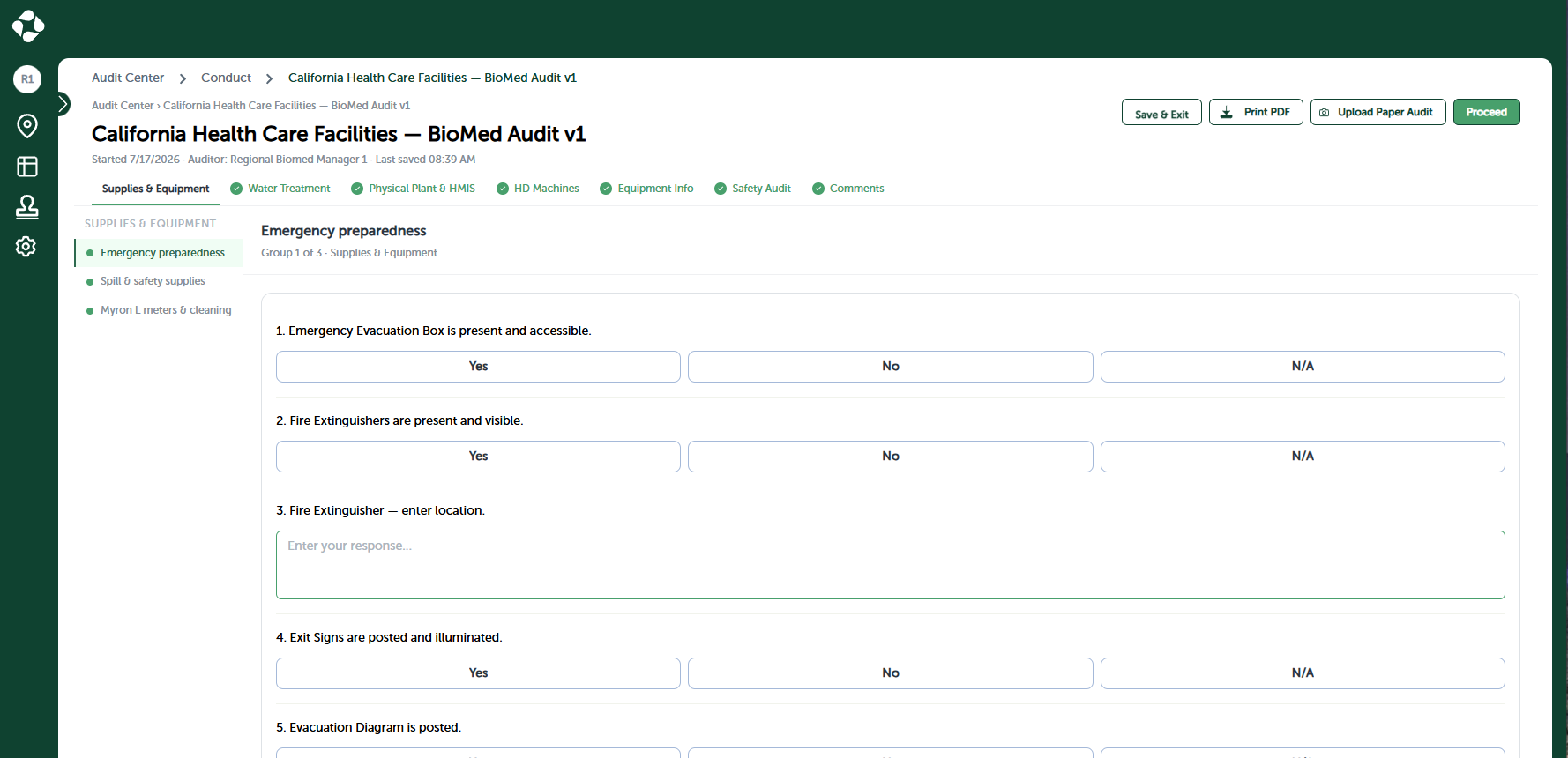
Rendevor runs dialysis operations across more than 70 facilities nationwide, managed by 4 regional teams, many inside correctional settings, and needed a way to see where their internal processes were losing time and money. The project started as a discovery workshop with the client to map operations end to end and find either a bottleneck or an opportunity to free up staff time.
That workshop surfaced the audit process as a black box. Nobody in the organization could describe it start to finish. Audits moved through a maze of delegations and sign-offs with no visibility into status: was a given audit in review, and with whom? What was needed to move it forward? Was it stalled in a remediation step waiting on a corrective action, and had that action actually been verified before the audit moved on? No one could answer those questions with confidence.
Underneath that was a bigger problem: there was no formalized audit process to begin with. Each department ran audits its own way.
Ran a series of workshops to map every user, workflow, and audit state across the organization. Followed that with one-on-one interviews across departments and regions, talking to both frontline users and subject matter experts, to pull out the actual process each group followed, define requirements, and identify practices worth standardizing company-wide.
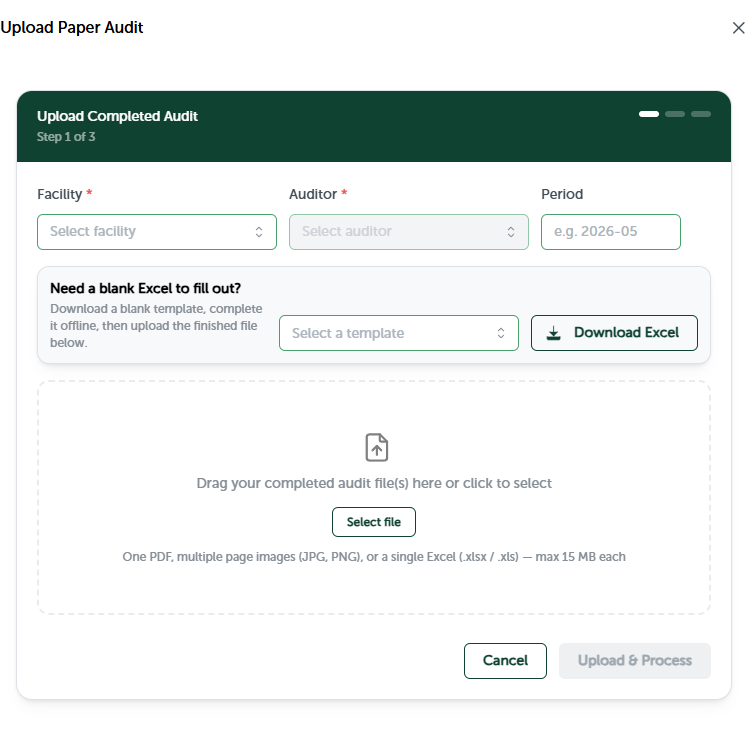
Two constraints shaped the design from there. First, the facilities themselves: because audits happen in correctional settings, device access varies by site. Some allow tablets and electronics, others restrict staff to paper only. Second, the paper workflow itself was generating rework: staff printed an Excel audit template, filled it out by hand, then re-typed it into a spreadsheet before the audit could move to its next step. Slow, and it introduced errors every time data got re-entered.
Designed and validated the solution in stages: low-fidelity wireframes, user validation testing, then high-fidelity Figma screens for usability testing. From there, instead of handing off static screens, I built a working prototype directly in Claude Code, then led the development team through the build, an MVP launch, and subsequent releases that expanded functionality across the organization.
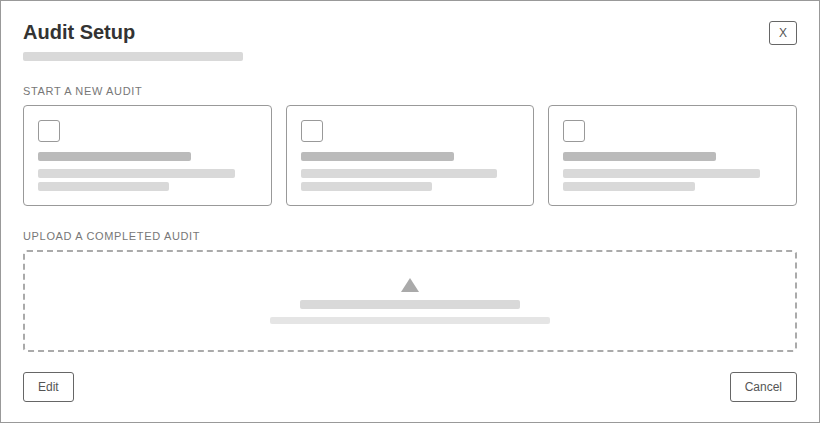
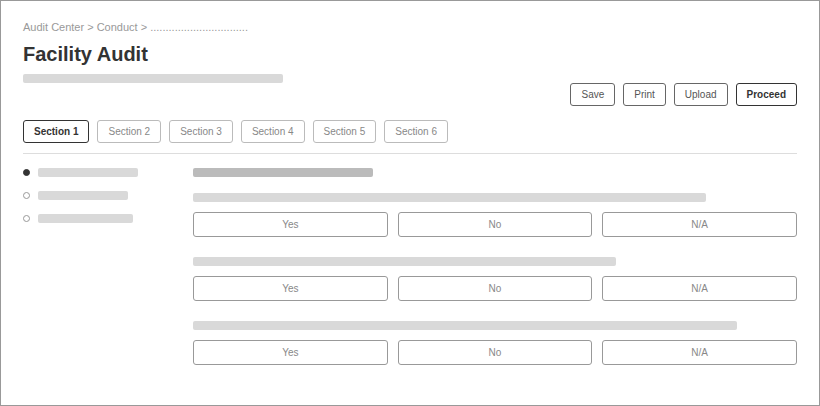
One audit format, three input modes
Built a single audit format that works whether staff are on a device, in Excel, or on paper, instead of mandating one digital-only tool across every facility.
Considered instead: standardizing on a single digital workflow. That wasn't viable given the facility restrictions on electronics, so the format had to flex to the environment rather than assume it away.
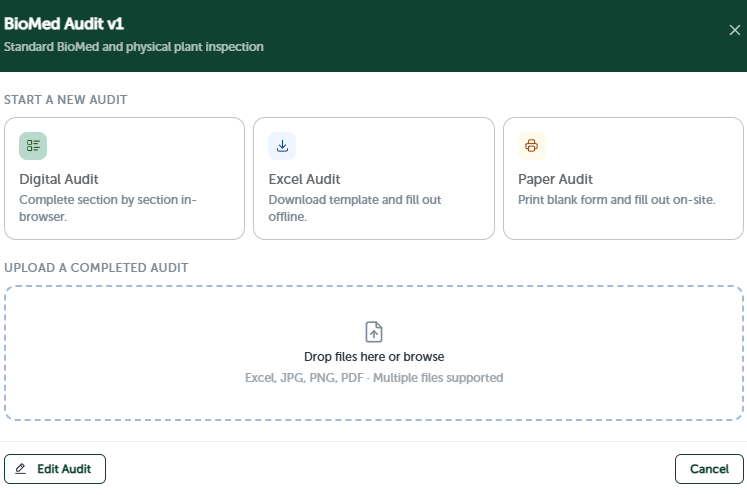
OCR instead of accepting the double-entry workflow
Added a handwriting-recognition layer, built on the Anthropic API, so paper-only sites could upload a photo or scan of a completed audit instead of re-keying it into a spreadsheet by hand.
Considered instead: leaving paper-based facilities on the manual re-entry process as an accepted limitation. That would have kept the slowest, most error-prone part of the workflow in place for exactly the sites least able to absorb it.
One standardized workflow, not eight digitized ones
Defined a single audit taxonomy and workflow, built from the cross-department research, rather than digitizing each department's existing (and inconsistent) process as-is.
Considered instead: building the tool around each department's current process to minimize change management. That would have preserved the black box in digital form. The actual problem was the absence of a shared process, so the design had to fix that first.
"AI handwriting recognition cut manual audit entry by 80%."
Rendevor got its first fully transparent, end-to-end audit system: every audit's status, owner, and next step are now visible as it moves through review and remediation. That transparency directly reduced their regulatory risk with health and government oversight bodies. Leadership also got, for the first time, real data on audit findings across teams and facilities, enough to spot patterns and make informed decisions at the C-level instead of guessing.

The workshop-first approach is what actually found the real problem. If the project had started from "audits are slow, build a faster audit tool," it likely would have shipped a faster version of eight different broken processes. Starting from operational discovery instead of a stated solution is what surfaced that the real fix was standardizing a process that didn't exist yet.